From Scarcity Thinking to Capacity by Design
Shifting from scarcity thinking to intentional systems design creates capacity — replacing reactive urgency with clarity, alignment, and deliberate progress.
WORK & SYSTEMS

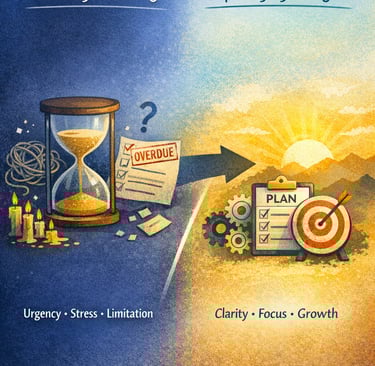
When we think about work, we often operate from a place of scarcity around what we want and abundance around what we don’t.
Not enough hours in the day.
Too much work and too few people.
Not enough time for deep focus.
Pulled in too many directions.
This mindset matters because it directly affects our focus, performance, morale, engagement, and attention span.
It’s easy to lose time in work we care about.
And just as easy to feel drained pushing through work we don’t.
This tension is often framed as a motivation problem.
It isn’t.
It’s a systems problem.
Putting systems in place does take work. Designing them thoughtfully requires time, reflection, and iteration. Leveraging them consistently also takes effort. But that effort isn’t wasted — it’s what allows us to act with intention instead of reacting by default.
The return is profound: systems can fundamentally change how we spend our time by aligning our actions with our goals.
A few system designs that create capacity:
1. Decision Once, Use Many
Reduce repeated decisions through standards, templates, and defaults.
2. Capture → Contain → Commit
Move thoughts out of your head and into a trusted system so attention can be directed intentionally.
3. Energy-Based Task Grouping
Organize work by cognitive demand, not just urgency or topic.
These systems don’t remove work, they remove invisible labor — and replace it with clarity, focus, and deliberate progress.
That’s how capacity is built.